My name is Ballu Chaudhary. I come from Ward No. 2 of Ghodaghodi Municipality in Kailali District of Nepal. There was a time when my hands held a weapon, my eyes burned with rage, and my heart was consumed by revenge. I believed violence was the only language the powerful understood, the only path left for people like us to claim our rights.
Today, those same hands carry a garland of unity. My heart holds a quiet but steady flame of peace. It sounds unreal, almost cinematic. But this is not fiction. This is my life. This is the journey that reshaped me from a 'fighter' into a 'peace campaigner'.
Even now, when I look back, my heart grows heavy.
I was born in the Kamaiya (bonded laborer) family. Suffering was not an exception; it was our daily routine. I worked endlessly in the landlord’s fields, my sweat soaking the soil, yet nothing belonged to me. Not land. Not a house. Not even dignity.
In 2000, the government announced the liberation of bonded laborers. On paper, we were free. In reality, we were abandoned. Freedom arrived without land, without shelter, without support. The chains were removed, but survival became even harder.
With nowhere to go, we began building small huts wherever there was empty space. Each attempt ended the same way. When we settled near forests, members of community forest user groups torched our huts and beat us. When we tried to live on public land, locals chased us away, setting our shelters on fire.
We were treated like stray animals. No one claimed us. The state ignored us. Society rejected us. From this deep injustice, anger was born. From anger to rebellion.
In a meeting of the Freed Kamaiya Society, a decision was made that changed everything.
“We can’t wait anymore. If the state won’t give us land, we will take government land ourselves.”
Under my command, a 'combatant squad' of 30 young men was formed. I was elected as the Central Chairperson of the Freed Kamaiya Youth Awareness Society, representing liberated bonded laborers across Kailali, Kanchanpur, Banke, Bardiya, and Dang Districts.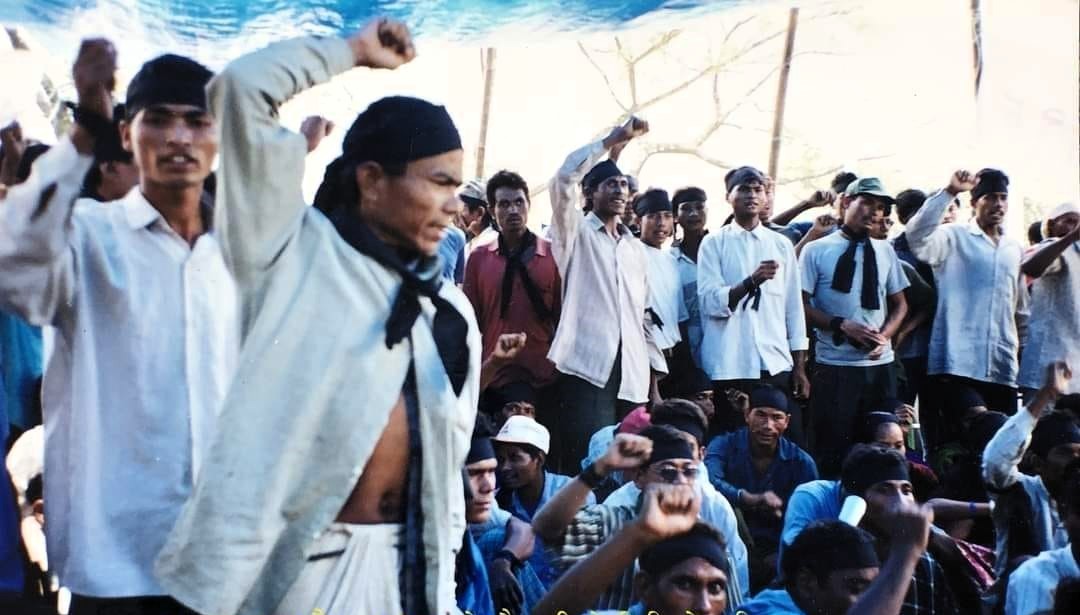
The movement spread like wildfire. Across five districts, we captured land. We faced beatings, arrests, injuries. But fear no longer mattered. We believed that to secure our rights, we must be ready to kill or die.
This movement continued until 2007. During that period, our biggest confrontation was with Kailali district chapter of FECOFUN (Federation of Community Forestry Users Nepal). Netra Prasad Khanal, then secretary of the federation, frequently disparaged the freed Kamaiya community, branding us as 'encroachers' and 'smugglers.'
Those words poured fuel on fire. Hatred hardened inside us. Revenge became our goal. We actively searched for an opportunity to attack him.
Then something unexpected happened.
The very organization we considered our enemy asked for two names from our community to participate in a “Natural Resource Conflict Transformation” training. The news shook us.
Meeting of the Freed Kamaiya Society was convened. Suspicion filled the room; the general consensus was that this was surely a trap—a conspiracy to frame freed Kamaiyas. At the same time, we felt it was necessary to attend, if only to understand our enemy’s strategy.
The collective conclusion of meeting was that we needed to send someone educated, capable of decoding strategies, and ready to fight if the situation turned sour.
Based on these criteria, the society had chosen me to go to Kathmandu for the training—essentially acting as a spy. I had no interest in the training. My goal was simple: uncover FECOFUN’s conspiracy.
The first phase of the training lasted seven days. Even there, my guard never dropped. The trainer was an American professor, John Paul Lederach. I spent the entire day on high alert, listening intently, thinking, 'When will they speak against us so I can catch them in the act?'
But nothing happened.
No accusations. No schemes. Only discussions about peace, coexistence, and dialogue.
I returned home and reported everything to my society. Still, distrust remained.
The training was seven modules modular training. Therefore, I attended the second phase of the training as well. Again, no hostility. Instead, I learned practical ways to manage conflict, to establish and maintain peace at the community level.
Something inside me shifted. I realized—my purpose was no longer about seeking revenge, but about fostering reconciliation and mutual understanding.
After I returned from the second phase of training, the land occupation campaign came to a halt. I also started practicing facilitation in one conflict case based on the learnings from the training.
The members of the Freed Kamaiya Society repeatedly pressed me with the same question: 'What kind of strategy is FECOFUN plotting against us?' I gave them the same answer: 'They aren't planning anything of the sort.
My friends began to doubt me, whispering, 'has Ballu switched sides? Why isn't he aggressive like he used to be?'
Meanwhile, FECOFUN started treating me as an insider, saying, 'Ballu, you are one of us now. You should keep us informed about what the Freed Kamaiya Society is planning.'
I found myself in a deep dilemma. I was torn apart: Who am I? Where do I belong?
During the third module of the training, I turned to my trainer, professor John Paul Lederach, and asked, "Guru, everyone claims me. Who do I actually belong to?"
He smiled gently and said, "You are a mediator. You are a peacebuilder. You belong to everyone; you are the bridge that connects them all."
That sentence struck me like lightning. I realized that the violence and animosity I had harbored were not only causing me pain but were hurting everyone around me. I understood that if I wanted peace for myself, I had to respect others as well. It was in that moment that I truly began my journey from violence toward peace.
Our fight was with the state, yet we had turned neighbors and CFUGs into enemies. I had once dreamed of breaking Netra Prasad Khanal’s limbs; instead, I made a firm resolve to shake his hand and work together as partners.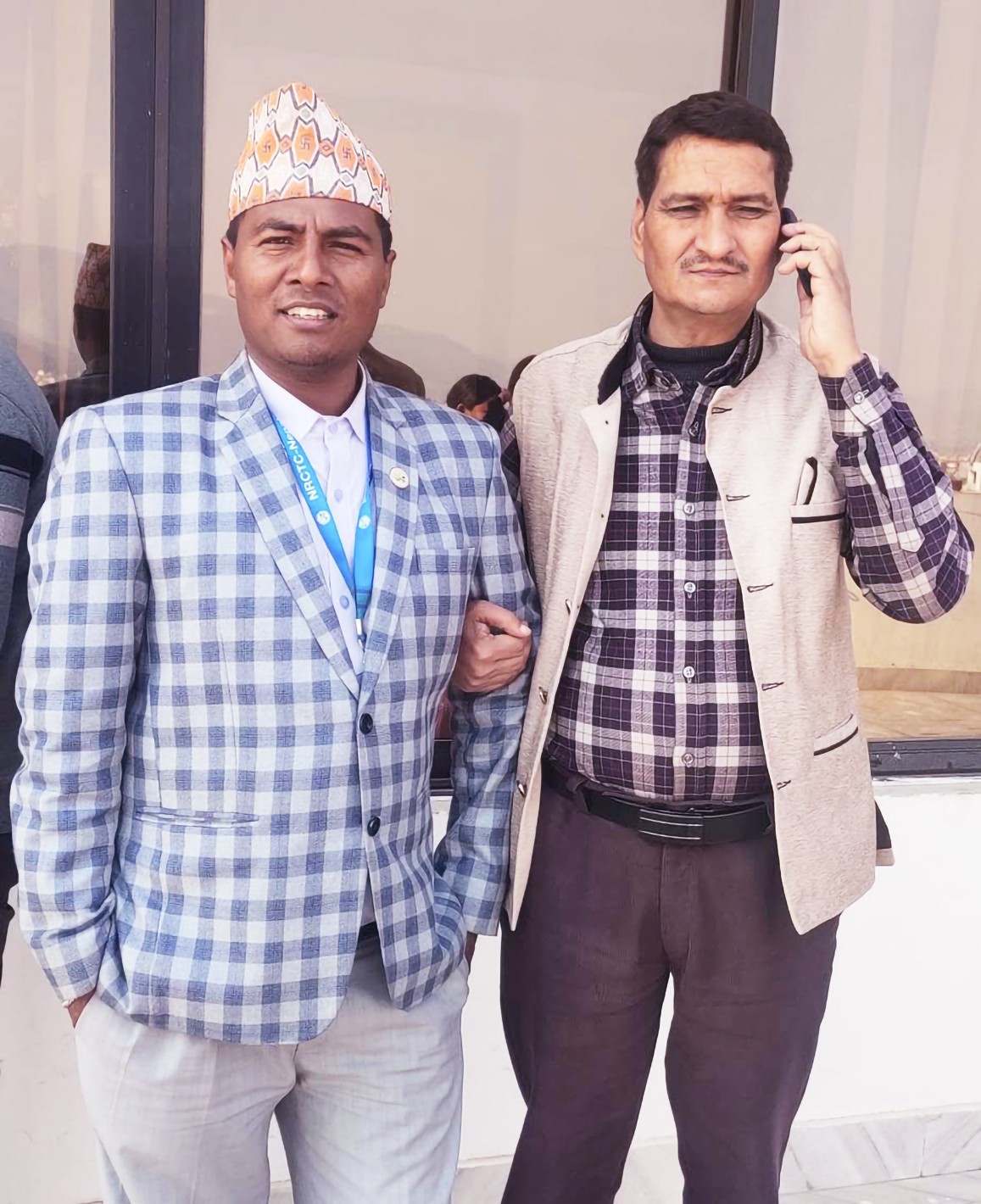
As I progressed, I began sharing these lessons with my own community, helping them understand the vital importance of dialogue and cooperation. By the time I reached the fourth, fifth, sixth, and seventh phases of the training, I had undergone a profound personal transformation; the fighter inside me had fallen silent.
From 2008 to 2026, my life changed completely. The combatant became a Regional Coordinator at the Natural Resource Conflict Transformation Center-Nepal (NRCTC-N). Today, I travel across communities, facilitating dialogue in multi-stakeholder conflicts over land, water, and forest resources.
Yesterday, I was out there clearing forests; today, I walk the path of conserving them. Once, I fought only for the interests of our one group; today, I have become a common figure for the entire society. My heart fills with joy when I see happiness return to people's faces and relationships restored through conflict transformation. I have found true fulfillment in the work I do.
NRCTC-N is not just an institution to me. It is my life’s turning point. From local facilitator to regional coordinator, this journey represents dignity and trust for a son of a freed Kamaiya family.
Sometimes, in moments of solitude, I look back at my past and ask myself: 'Why did I choose violence? Why was I so intent on hurting others?' Perhaps it was simply because there was no one there to show me a better path.
Today, I bow in gratitude to my mentor John Paul Lederach, Amit Dhakal, and Chup Bahadur Thapa, the Executive Director of NRCTC-N, for showing me the right path. I hold the deepest respect and reverence for them. It is their inspiration and guidance that transformed me into a peacebuilder. Otherwise, I might have ended up behind bars today, or perhaps my body would be lying abandoned and forgotten somewhere.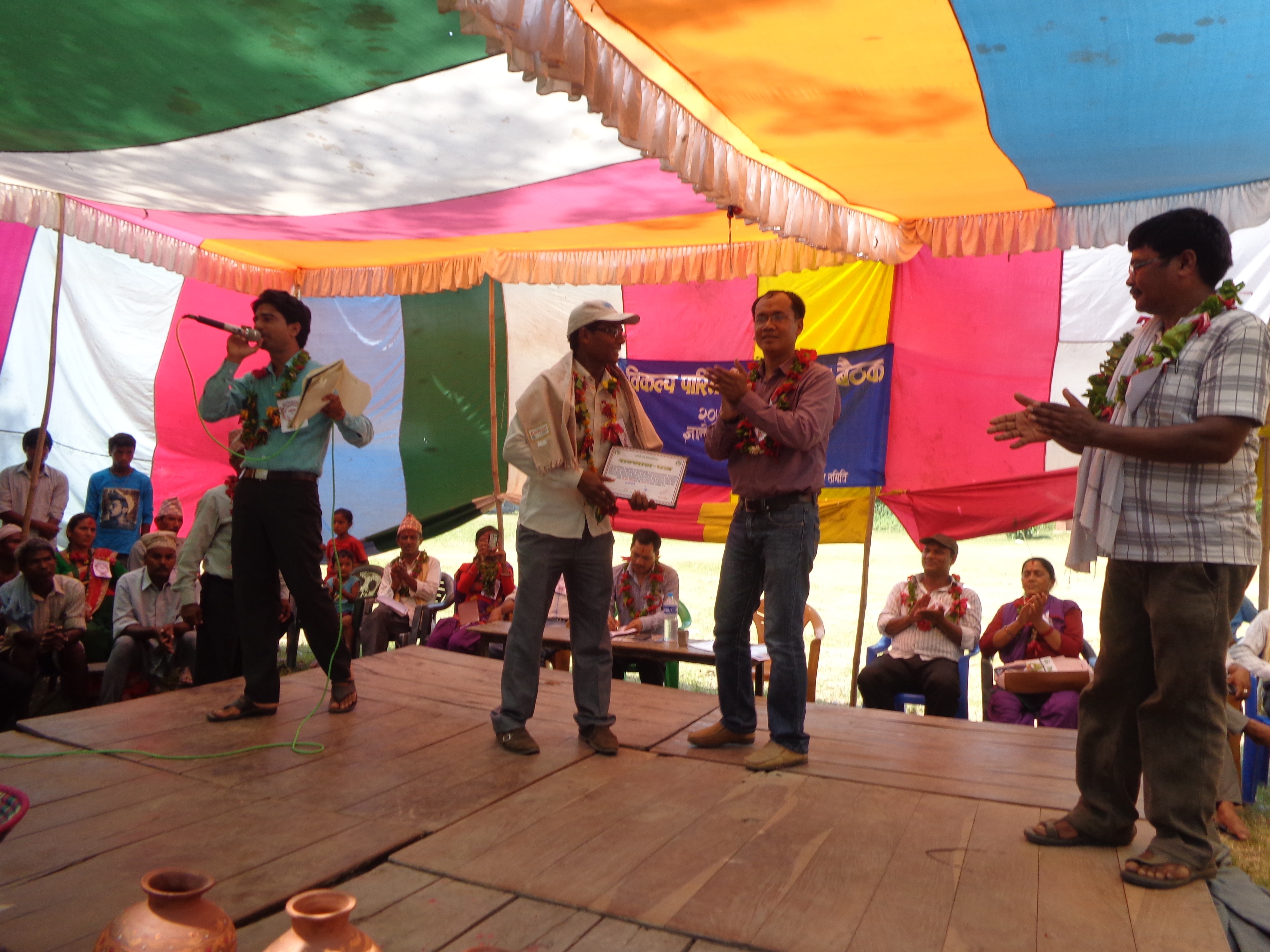
Today, I stand proudly as a neutral bridge for society. I am convinced of one truth: violence destroys, but dialogue unites.
The greatest lesson of my life is simple: 'Stealing the happiness of others for one's own gain is the root of conflict, but accepting the existence and rights of all is true peace.'
The 'Fighter Ballu' of yesterday is gone; in his place, 'Ballu the Peace Campaigner' lives. This personal transformation is my greatest achievement—an evolution made possible by the vital role of the Natural Resource Conflict Transformation Center-Nepal (NRCTC-N).