The roots of this conflict stretch back more than half a century, to a time when the Zamindari system still shaped land ownership and power in Nepal. In those days, land meant survival, status, and security. It also meant control.
In the then Shanischare Village Development Committee of Jhapa, Bhalu Chaudhary owned 7 bighas and 10 katthas of land, roughly 12.55 acres. Like many settlers of that era, he had cleared forest land with his own labor and brought it under cultivation. Farming was his livelihood, but money was scarce. In 1957, Chaudhary borrowed money from a fellow villager, Moti Bahadur Khadka, keeping his land as collateral.
Soon after, Chaudhary left the village. Years passed. He never returned. Khadka searched for him repeatedly to recover the loan, only to eventually learn that Chaudhary had died. With the borrower gone and the debt unpaid, Khadka approached the local Zamindar, submitting the loan deed as proof of his claim and requesting that the land be transferred to him.
The Zamindar ruled in Khadka’s favor, concluding that the lender had a legitimate claim since Chaudhary had died without repaying the debt. In 1964, Khadka registered the land in the name of his wife, Hari Kumari Khadka, and obtained the land title.
What followed set the stage for decades of conflict.
A year later, Khadka claimed that an additional 1 bigha and 10 katthas (approximately 2.51 acres) of land had been left out during registration. This land was being tilled by Hari Mainali. Khadka approached the District Land Revenue Office, saying he had forgotten to register it earlier. Mainali, who had been cultivating the land, moved the District Court in 1971 to challenge the claim. The case dragged on for three years before being revoked, without resolving the conflict.
Unwilling to give up, Mainali took another path. He settled nine families on surrounding unregistered land and mobilized them to resist Khadka’s claim. Together, they moved the Appellate Court in Dhankuta.
The court ordered the District Land Revenue Office to conduct a field inspection and determine whether the conflicted land fell within Khadka’s claim. If it did, the land was to be granted to him. Acting on this order, Khadka applied to the District Land Revenue Office in Jhapa. In 1983, the office ruled in favor of the Khadkas.
But the ruling went far beyond what the court had ordered.
Instead of registering only the conflicted portion, the Land Revenue Office registered a total of 18 bighas and 5 katthas, around 30.54 acres, in the name of Hari Kumari Khadka. This was far more land than Khadka had originally claimed. At the time, Khadka himself was a staff member at the Land Revenue Office, a fact that later deepened resentment and suspicion among local farmers.
Other local farmers, who had started tilling land after clearing forest like Chaudhary, also later learned that the land they were tilling had also been registered under Hari Kumari’s name. For nine households, this meant losing the land they depended on for survival. In 1984, they filed a case against Hari Kumari, seeking revocation of the land registration.
“We had settled on unregistered land,” recalls Bimala Mainali, one of the cultivators. “Moti Bahadur Khadka got the land certificate without our knowledge. We filed the case in 1984. During the case, we had to harvest paddy at night. In the daytime, police would come looking for us.”
The legal battle moved from office to office, from court to court. It passed through the Chief District Officer, the Chief Zonal Officer, and the Appellate Court, before finally reaching the Supreme Court. In 1997, the Zonal Court in Ilam ruled that the land registration in Hari Kumari’s name would not be revoked. The farmers immediately appealed to the Supreme Court.
While the case was still pending, Hari Kumari moved swiftly. She went to the Land Revenue Office and prepared inheritance documents, transferring the land to four individuals, including her sons and daughters-in-law. The office began dividing the land in a way that complied with the legal ceiling on land ownership.
This triggered yet another case. The farmers demanded that the inheritance transfer be stopped, arguing that they had ownership claims over the land. From 1997 to 2005, the case remained under review in the Supreme Court. Finally, the court issued a decisive order: the two sides were instructed to reach a settlement.
By then, the damage ran deep.
The farmers had spent significant amount of money and time in litigation. Generations had grown up knowing only hostility. The community was fractured, divided along lines of ownership and survival. Sensing the gravity of the situation, local leaders stepped in. Former VDC Chair Ram Prasad Bhattarai and then lawmaker Kedar Mani Dhakal proposed a compromise: 75 percent of the land to the Khadkas, and 25 percent to the farmers.
Neither side agreed.
According to Bhairav Khadka, former ward chair and representative of the Khadka family, the farmers demanded the opposite. “They wanted 75 percent, leaving us with 25 percent,” he says. “Both sides stood firm. In the end, neither the landowners earned income from the land, nor did the farmers get land titles. We would quarrel whenever we met.”
After the first Constituent Assembly election in 2008, which abolished the monarchy, discussions resumed. Lawmaker Prem Bahadur Giri and other local stakeholders tried to revive dialogue. There was hope, but no sustained process. Without regular dialogue, trust never took root.
By this time, social harmony had completely collapsed. The two sides did not just argue. They fought. They boycotted each other’s social and religious events, even funerals. Dialogue felt impossible.
A turning point came after the local elections of 2017. Thirty-six households, including that of Ambika Mainali, submitted a formal complaint to the Judicial Committee of Arjundhara Municipality. After federal restructuring under the 2015 Constitution, the conflicted land now fell within wards 10 and 11 of Arjundhara Municipality.
The Judicial Committee referred the case to the Natural Resource Conflict Transformation Center-Nepal (NRCTC-N), an organization known for transforming complex, multi-stakeholder conflicts over land, forests, and water through dialogue.
In July 2018, NRCTC-N facilitators in Jhapa formally began working with the 18-household landowning community, the settlers on unregistered land, and the Khadka family.
This approach was different.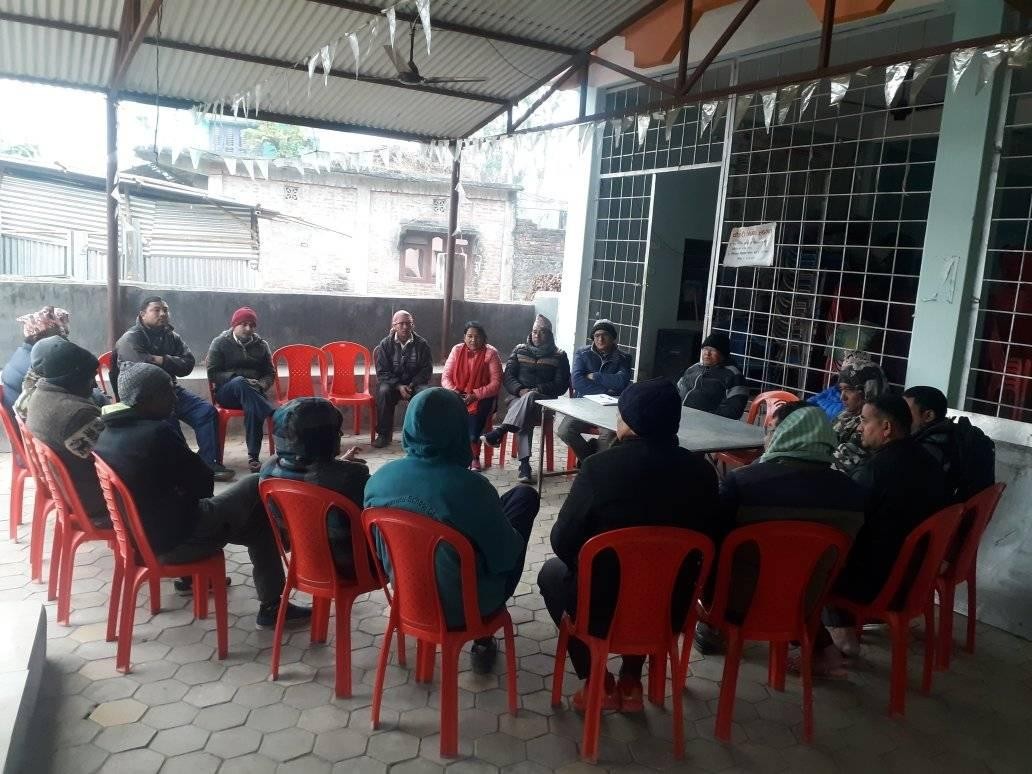
Instead of reopening old legal arguments, the facilitators emphasized dialogue, mutual understanding, and shared responsibility. They explained the conflict transformation process and formed a “Spider Group,” made up of people directly involved in the conflict and trusted by the community.
The group was tasked with weaving connections, much like a spider web, flexible yet strong enough to hold everyone together.
These members received three days of training for capacity building and leadership transfer.
The "Spider Group" has a good understanding of the conflict as it includes conflicting parties, stakeholders, and individuals who know about the conflict.
“At first, we were confused,” recalls Spider Group member Jagat Bahadur Rana. “Many efforts had failed before. When the Center said it would form a Spider Group, it felt strange.”
The Center held separate discussions with each group, ensuring that everyone felt safe to speak openly. They gathered information about roots of the conflict, listened to grievances, and documented losses.
Farmers spoke of decades of financial strain and mental exhaustion. The Khadkas pointed to their legal land ownership certificates (Lalpurja) and their inability to use the land peacefully.
The Spider Group met regularly. Together, they developed rules for dialogue, endorsed jointly by both sides. Instead of arguing over who was right, they asked a different question: how can this be transformed in a way everyone can live with?
In April 2019, after months of facilitation and dialogue, the parties reached a 10-point agreement.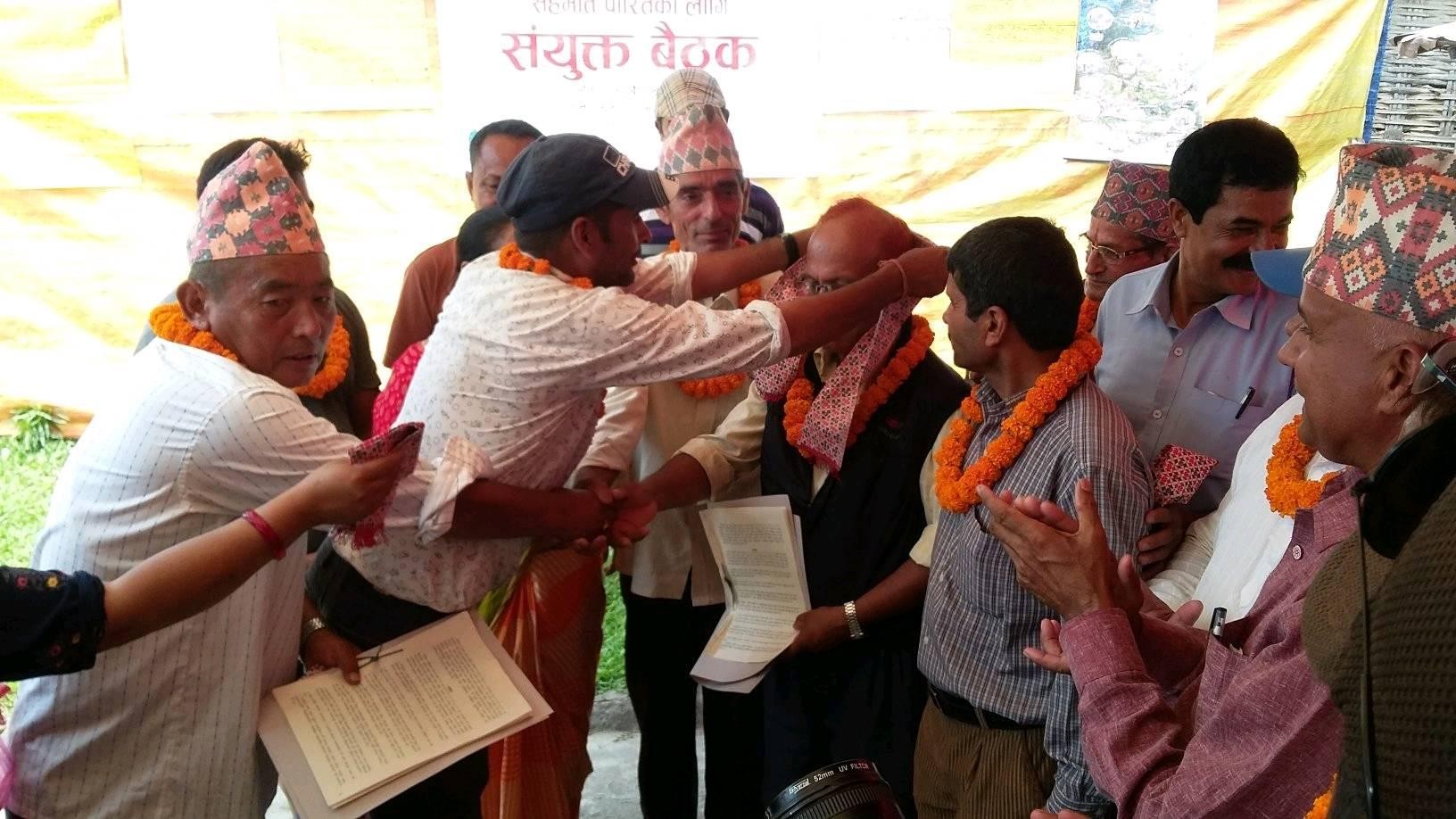
They agreed to divide the land equally and share the costs of surveying. The Khadkas would receive a single, continuous plot running north to south, while the remaining land would be distributed among the farmers. All pending court cases would be withdrawn by mutual consent. Land ownership certificates (Lalpurja) would be issued according to law.
For the first time in fifty years, the conflict ended not with a verdict, but with an agreement.
The change was immediate and visible. Families who had been afraid to build homes began construction. Fields that had stood idle were cultivated freely. Former enemies visited each other’s houses. They attended weddings, religious ceremonies, and funerals together.
“We spent fifty years fighting in courts,” says Bimala Mainali. “It drained us financially and mentally. This Center was a blessing. It transformed the land conflict and healed our relationships.”
She admits that earlier, even seeing a Khadka was unbearable. “Now we sit together and talk. Without this institution, this would never have been possible.”
Bhishma Raj Paudel, who uses the land, agrees that the Center transformed the conflict while also eliminating mutual bitterness.
Moti Bahadur Khadka, who had spent nearly his entire adult life entangled in litigation, passed away on August 21, 2022. In a powerful moment of transformation, Bimala Mainali, her family, and others who had once fought him in court attended his funeral and visited the Khadka home with rice for the mourners.
Bhairav Khadka, from the Khadka family, also acknowledges that the Center has benefited society greatly. "We were deeply worried about how this conflict could be resolved. The Center forming spiders transformed it through dialogue."
Today, the impact goes beyond this single case. Locals who observed the Spider Group’s work now believe that dialogue can transform even the most entrenched conflicts. “This process creates victory for everyone,” says local stakeholder Shyam Ghimire. “We can use it for other conflicts in our society.”
The community now approaches problems through dialogue. People speak without fear. There is no exclusion based on gender, class, or ethnicity. Perceptions have shifted. Unity has replaced suspicion.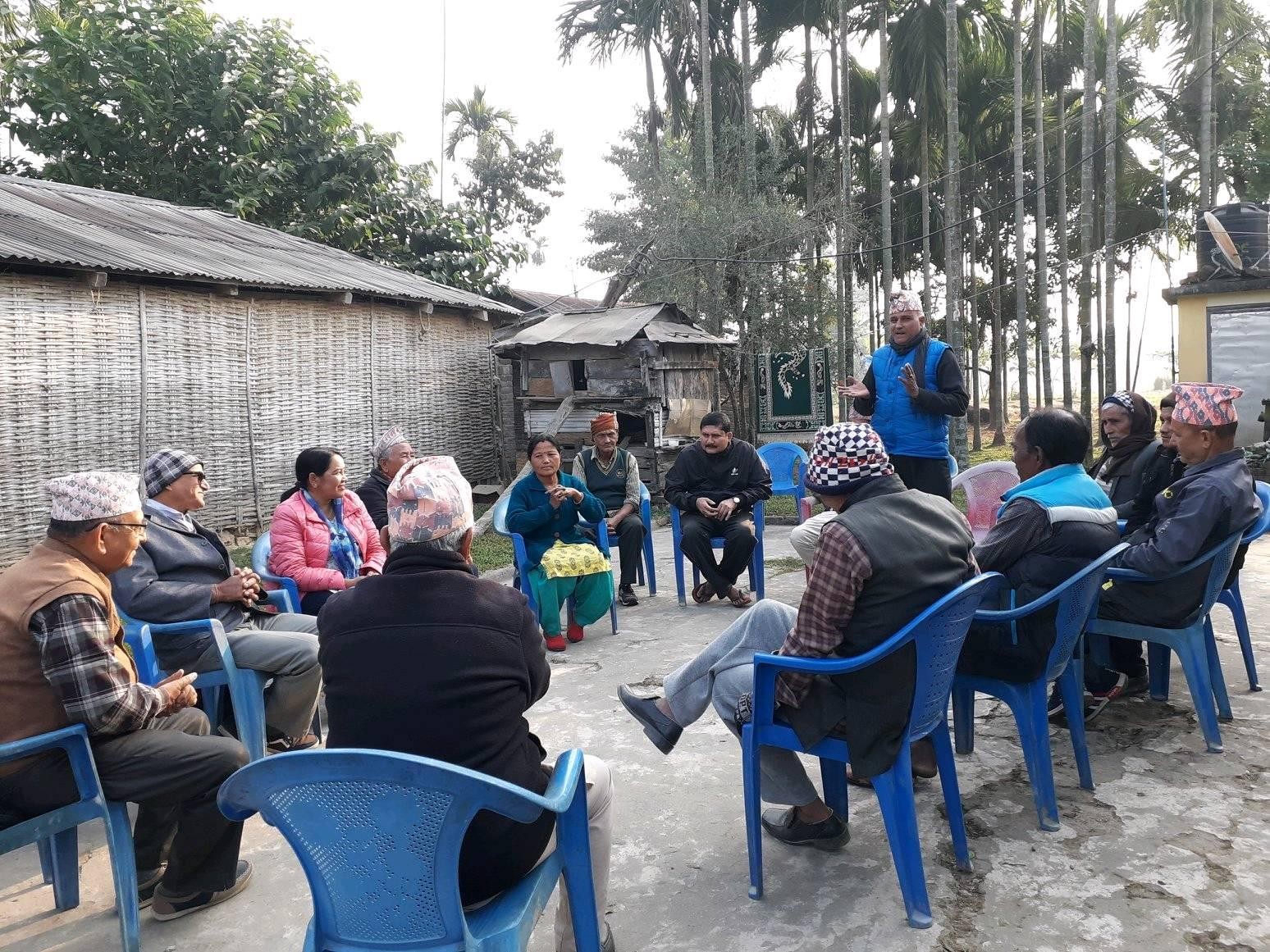
Out of 50 affected households, 49 have already received collective land ownership certificates (Lalpurja). One remains in process.
When the final land ownership certificate (Lalpurja) is issued, both sides plan to celebrate together. Old and young, once divided by five decades of courtroom battles, will mark the day not as winners and losers, but as neighbors who finally found peace