Conflicts over land are common, but when conflicts arise over sacred spaces like cemeteries, emotions can run deeper and tensions escalate faster. Pakhar village in Sindhupalchowk witnessed exactly such a situation—a conflict that simmered for years, threatening the very fabric of the community.
It began six years ago, when a man known locally as Rate, who had a physical disability and could not speak, chopped down a tree in the jungle of Pakhar village. Rate acted impulsively and walked away, leaving the fallen tree behind. But the incident soon ignited a conflict that went far beyond a single tree.
The villagers found themselves on the brink of fighting one another as they sought to determine whose land the tree had stood on. What began as a conflict over who owned the tree when it was chopped down turned into one where people threatened to chop persons.
The three main parties involved in the conflict were the school group, the community forest, and the local residents. Pakhar village, located in Ward Number 7 of Lisankhapur Rural Municipality in Sindhupalchowk, is predominantly inhabited by Tamangs. Sansarimai Secondary School took the first step by initiating a land measurement process, claiming that the tree had fallen on its land. It sought the assistance of a registered land surveyor to carry out the measurement.
Adjacent to the school's land is the Lamachaur Community Forest. The locals cremate their loved ones in a cemetery situated within the forest.
The land measurement conducted by Sansarimai Secondary School indicated that the cemetery also fell within its boundary. This attempt by the school to claim ownership of the land reserved for such a sensitive purpose as burial deeply angered the residents of Pakhar village.
The Lamachaur Community Forest vehemently sided with the locals and accused the school of attempting to encroach upon their land. These mutual accusations only served to fuel the conflict, leading to the erosion of once cordial relationships. The respect, assistance, and goodwill that had previously existed among the community members were reduced to ashes. The conflict surrounding the graveyard had turned the hearts of the locals cold, much like a tomb.
The animosity between the two sides became intolerable, as they would become furious at the mere mention of individuals associated with the opposing side. Former friends turned into adversaries, going out of their way to avoid crossing paths along the local roads. They harbored deep anger toward each other, even to the point of disregarding blood relations. Expletives were exchanged, and threats of various methods of violence and murder were openly proclaimed.
The locals accused the school of mocking their ancestors and disrespecting their cemetery. They felt that the school's actions were an attempt to encroach upon the land that had been used for generations as a burial ground. As a result, they expressed their refusal to send their children to the school. Some even suggested closing down the school and using its grounds for burying the deceased. The locals questioned why the school would try to seize the land that held such significant cultural and emotional value.
The village was already steeped in a climate of deep distrust, with no one trusting anyone else. This created a hostile environment where meaningful dialogue for seeking a resolution was impossible. The cycle of accusations and counter-accusations continued unabated, further exacerbating the situation.
“The conflict continued to grow due to lack of discussion between the two sides,” Principal of Sansarimai Secondary School Tej Bahadur Bhandari says.
As the conflict surrounding the sensitive issue of the cemetery continued to escalate, there was a conspicuous absence of any initiative to facilitate dialogue and find a resolution. The growing magnitude of the conflict posed a real threat to the lives of the villagers, yet no concrete steps were taken to address the situation. Some individuals even added fuel to the fire, while others silently suffered, unable to speak up or take action.
The community of Pakhar village was trapped in the bitterness of their strained relationships, desperately hoping that the court would intervene and bring an end to the conflict they themselves were unable to resolve. This sentiment was shared by Bayan Bahadur Tamang, the then Ward Chair, who recognized that the conflict among the school, community forest, and locals was not only a matter of local concern but also deeply intertwined with people's emotions due to its connection to the cemetery. “Nobody was ready to take a step back. They were not ready to even talk. And talks would start only after grappling when they met. It was, therefore, unimaginable to be resolved through dialogue,” Bayan Bahadur Tamang said.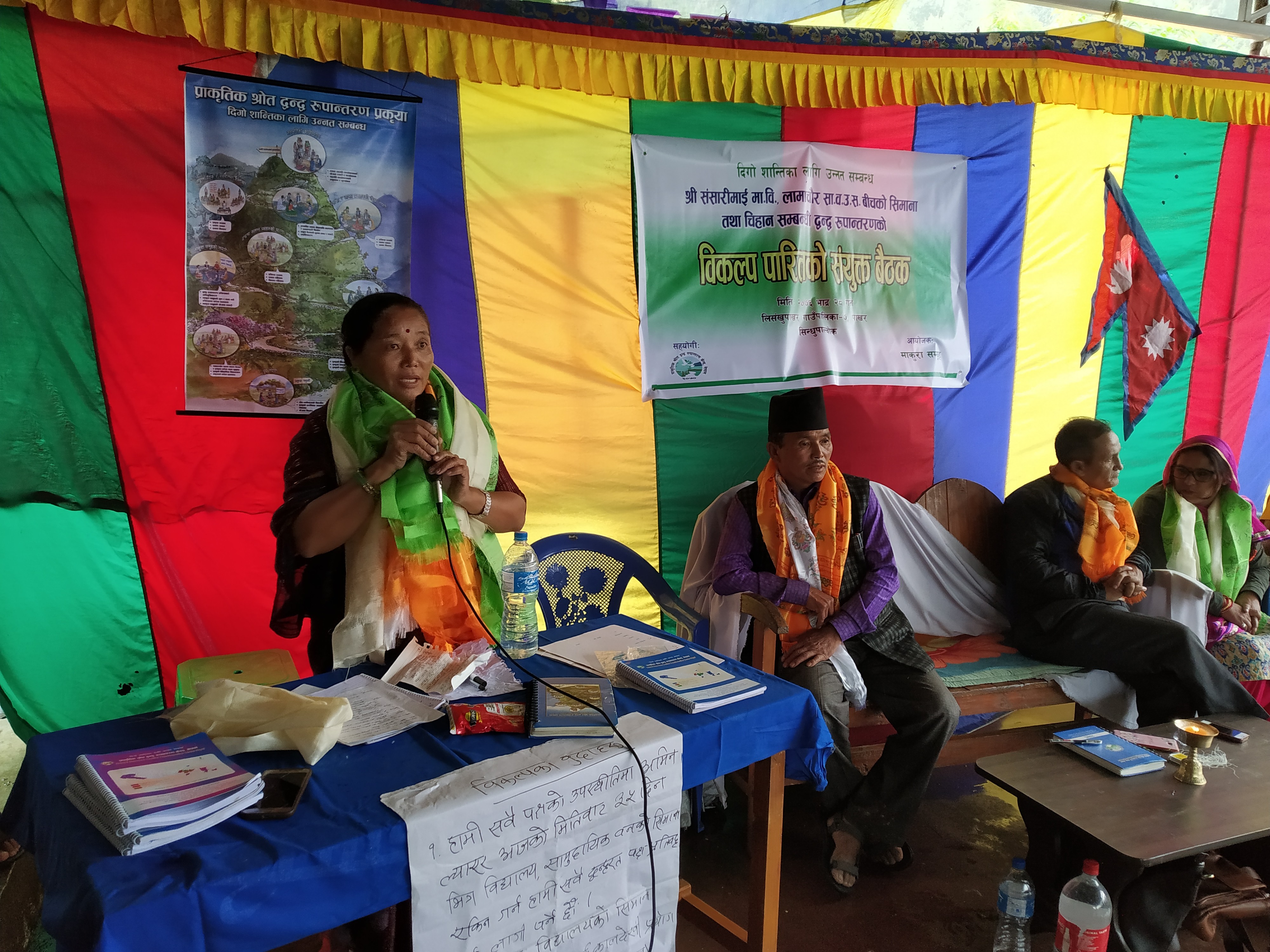
After some time, the matter was brought before the Judicial Committee of the Rural Municipality. Hem Ganga Moktan, the then Vice-chair of Lisankhapur and Coordinator of the Judicial Committee, found herself at a loss as to how to resolve such a complex conflict. Upon studying the situation following the registration of a complaint regarding the boundary dispute between the forest and the cemetery, Moktan realized the severity of the conflict, with recurring incidents almost on a daily basis.
The situation called for urgent attention and a thoughtful approach to bring about a resolution that could address the deeply rooted issues and restore harmony within the community.
Moktan still took an initiative to resolve the local conflict locally. Despite the local initiatives and efforts made by the rural municipality to find a negotiated resolution, it became evident that the parties involved remained steadfast in their positions, making it difficult to reach a satisfactory outcome.
Recognizing the impasse, the Judicial Committee sought the assistance of the Natural Resource Conflict Transformation Center-Nepal (NRCTC-N), an institute specifically established to transform conflicts over natural resources in villages and societies. The Center follows its own well-defined stages, system, and process for facilitating transformation, emphasizing the active involvement of the conflicting parties rather than imposing a verdict from the institute itself.
Commencing its work on conflict transformation from April 21, 2019, the Center engaged all participants in the conflict, forming a group known as the "Spider Group." This group consists of individuals directly involved in the conflict, as well as relevant stakeholders and individuals with a comprehensive understanding of the conflict. The "Spider Group" is named as such to reflect the concept of integrating the entire society by fostering flexible networks akin to spider webs, and it comprises community members who possess clear communication skills, persuasive abilities, and the proactive initiative to transform conflict. These members undergo training to enhance their conflict transformation skills.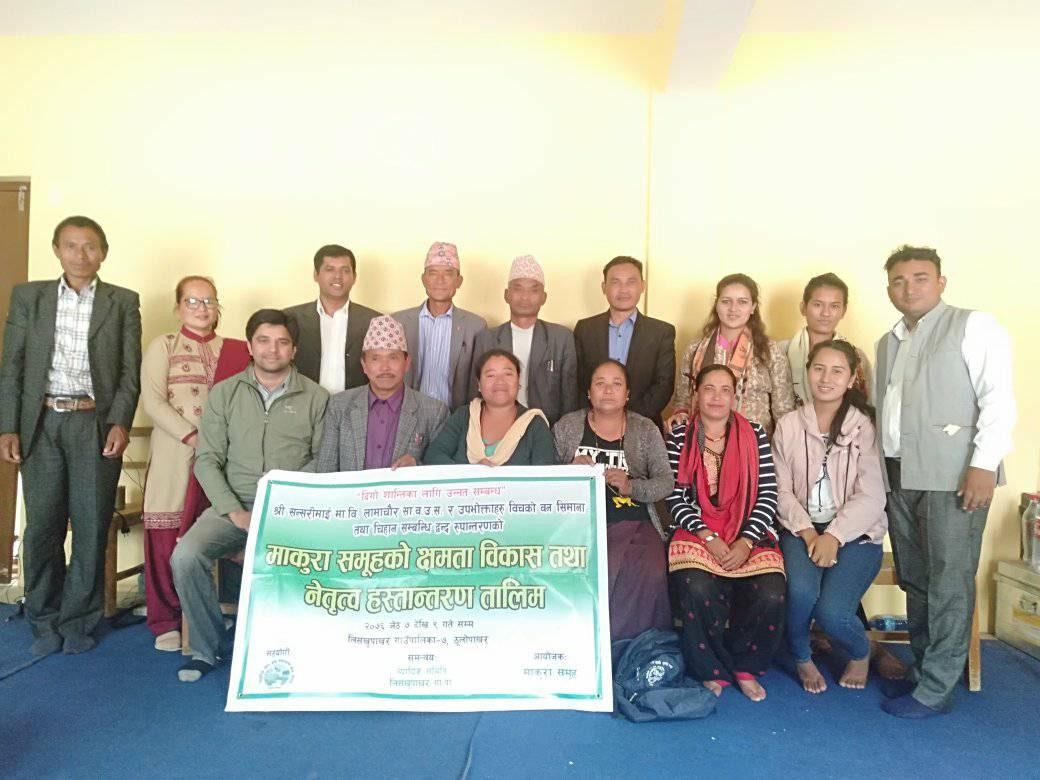
Despite the efforts of the "Spider Group," their work within the community is not without challenges. They often face allegations and abuses as they endeavor to mend broken relationships and heal wounded hearts. The task of reconciling torn bonds is more arduous than ascending a mountain, yet their commitment persists, driven by the aspiration to achieve a transformation.
According to members of the "Spider Group," Ayushi Tamang and Ranjita Nepal, it was alleged that the school had encroached upon 25-30 meters of the cemetery's land. However, the community members supporting the cemetery strongly opposed the school, claiming that the land they had allocated for burial for ages was finished.
Ayushi and Ranjita confess that they initially felt apprehensive and fearful when chosen as members of the "Spider Group." They doubted their ability to transform a conflict that seemed destined for the courtroom. The magnitude and gravity of the conflict made it difficult to fathom a transformation through community-level dialogue. At times, they contemplated giving up in the face of opposition and criticism from the people they were working to reconcile.
The Center facilitated regular discussions and meetings involving all parties to the conflict. Each individual involved in the conflict expressed their opinions, often leading to heated arguments and near altercations, as recounted by facilitator Tika Subedi. Some locals even warned the facilitators about the potential danger and bloodshed associated with attempting to transform such a contentious conflict.
Undeterred by the threats, the members of the "Spider Group" persevered, remaining united in the face of adversity. Through their dedicated efforts, the meetings gradually became less contentious, allowing people to express themselves more openly and allowing their demands and positions to crystallize. As the core issues of the conflict became clearer, alternatives emerged, with discussions focused on finding an agreement that would satisfy everyone involved.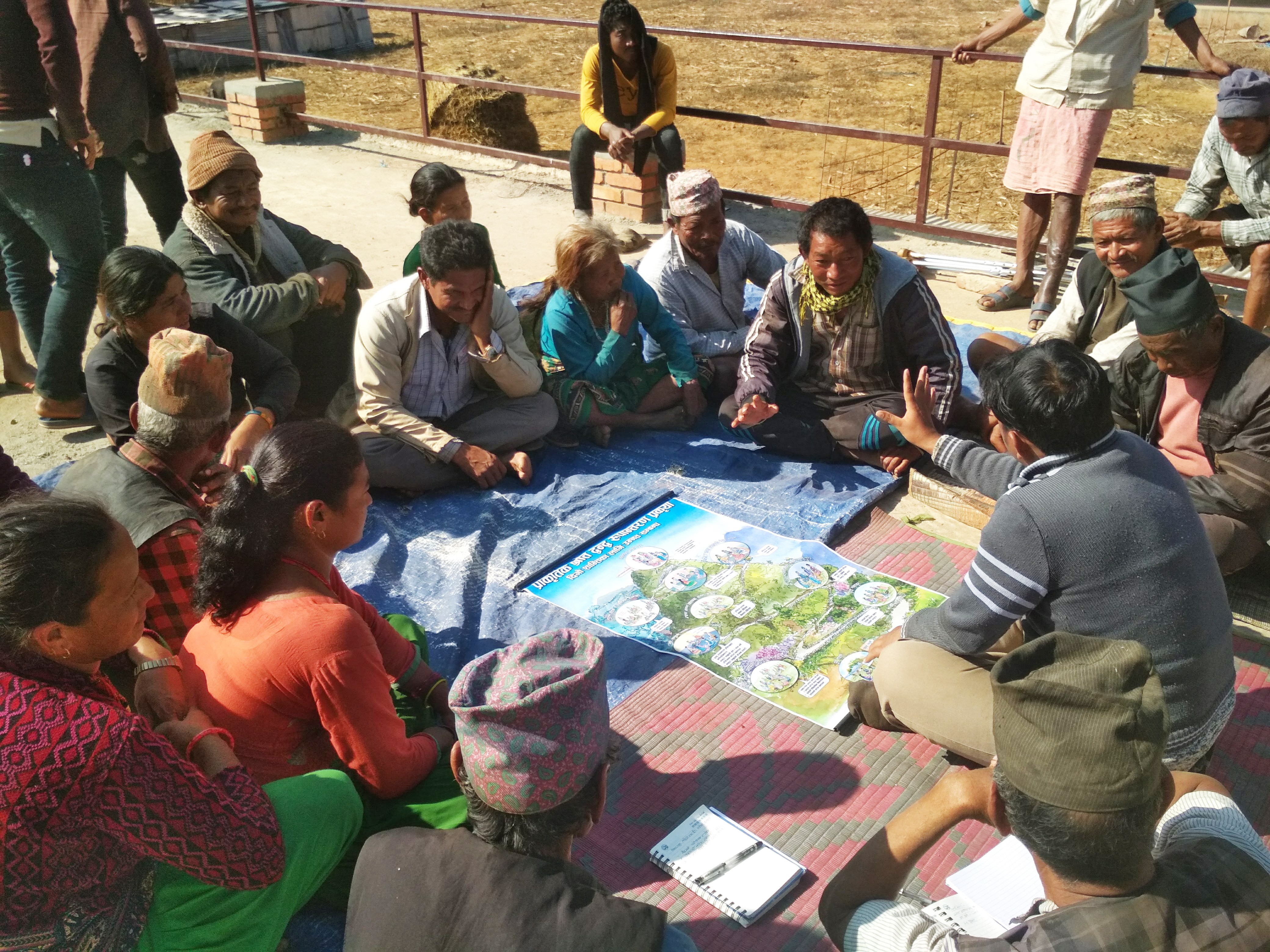
After four to five months, a joint meeting of nearly 150 people resulted in an agreement among the villages. Subedi fondly remembers the meeting as a joyous occasion, resembling a cultural program with various processions. The relief and happiness were evident on everyone's faces, indicating that the peace campaign in Pakhar had reached its pinnacle.
During the gathering, the points of agreement were read out, leading to both sides signing the agreement and embracing each other amid thunderous applause from the attendees. Subedi describes this moment as the revival of damaged trust. “The whole of Pakhar village had doused the fire ignited on the issue of cemetery and lit a candle.”
The conflict actually stemmed from uncertainty about the exact boundary extension. Once a team of surveyors from the Office of Survey arrived and determined the boundary, the matter was transformed. The locals were allocated five ropanis (approximately 0.628 acre) of land for the cemetery, and the boundary between the school and community forest was clearly delineated, bringing calmness to both sides.
Ayushi and Ranjita express great satisfaction in being able to transform what seemed like an insurmountable conflict through continuous dialogue. They believe that ongoing dialogue has the power to mend broken relationships and bring peace back to the community, cherishing the day when joy ultimately prevailed after relentless efforts.
Tej Bahadur Bhandari, the Principal of Sansarimai Secondary School and a party involved in the conflict, expresses his happiness and gratitude toward the Center for successfully transforming the conflict. He now firmly believes that even serious problems can be resolved through discussion and dialogue. Bhandari opines that the people involved in the conflict shifted their focus from anger and hostility toward reconciliation as they expressed their positions and gained understanding of each other's perspectives.
The society has undergone a significant transformation since the settlement of the conflict. People from both sides are now on good terms and visit each other's homes, fostering a spirit of social unity. Works that were stalled due to the conflict have resumed, as confirmed by Ward Chair Bayan Bahadur Tamang. The construction of school buildings, graves, houses, and other physical structures has taken place. The community now emphasizes discussion and inclusive representation before undertaking any activity or construction. Decisions are made with the participation and consent of as many people as possible.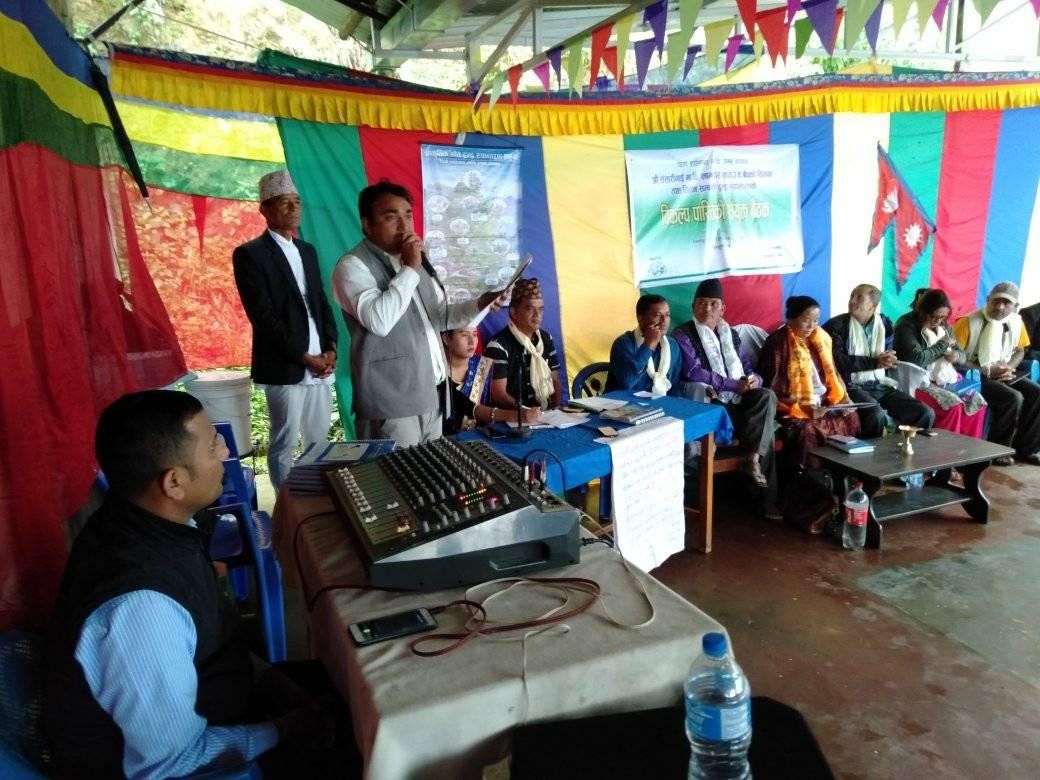
Ward Chair Bayan Bahadur Tamang expresses his pleasant surprise and admiration for the Center’s approach. He acknowledges that while he is unsure about the working style of other NGOs, the Center engaged in discussions with everyone involved in the conflict, ensuring that no one was left out. The institute informed all stakeholders about its plans and budget, setting a positive example for other NGOs operating in the area. Inspired by its working model, Bayan Bahadur Tamang has started requesting plans and budgets from other NGOs that come to his ward.
The community has experienced a shift in their perception of the conflict transformation process facilitated by the Center, according to him. The people have developed trust in the effectiveness of dialogue and discussion as a means to transform even complex and unresolved conflicts.
Hem Ganga Moktan, the Vice-chair of Lisankhapur Rural Municipality and Coordinator of the Judicial Committee, now believes that recommending the Center for transforming the conflict was the right decision. She has gained a thorough understanding of the conflict transformation process employed by the Center.
Moktan highlights the importance of dialogue as the key aspect of the process and praises the dedication and patience demonstrated by the members of the "Spider Group" and the facilitators. Despite facing threats and abuses, the facilitators and group members persisted in their efforts to resolve the conflict, often sacrificing their own needs and time. Moktan expresses deep gratitude to them for their commitment. “A very big conflict inside our local body has been transformed through dialogue by satisfying all the sides. This is a big achievement for us.”