It was about twenty-seven years ago. The Maoist conflict was at its peak. Widespread unrest and insecurity were forcing people to abandon their homes and become displaced. Among those who migrated, some ended up as neighbors in existing settlements, while others went on to establish entirely new communities themselves.
Establishing a new settlement was not easy; therefore, many people chose forest areas and government land. One such place is the Laukeni Ghyangle forest, located in Ward No. 2 of Panchkhal Municipality in Kavre District.
This is a community forest. Around 2052/53 BS (1995/96 AD), as the Maoist conflict was beginning, it was registered with the District Forest Office, Kavre, and formally handed over to the community. Spanning nearly 250 hectares, the forest has more than 300 user households, most of whom belong to the Tamang community.
After receiving responsibility for the forest, the community managed and utilized it well. General assemblies and meetings of the users’ committee were held regularly. As everyone benefited from the forest, they made every possible effort to conserve and protect it.
For two to three years, everything went well. Then, suddenly, there was unusual activity in the forest. Some individuals arrived and put-up makeshift huts and tin-roofed sheds. They began digging the forest land, cultivating crops, and settling within the forest itself.
Local residents asked them, “Where have you come from, and why are you living in the forest?”
Some said they had come from across the Koshi River, others from Timal, and some from Sindhupalchok. Yet they all gave the same answer: “We are relatives of the local residents, and we have come to live here.”
The locals tried to stop them, saying that it was not permissible to settle on community forest land in this manner. However, they refused to withdraw.
When repeated warnings went unheeded, members of the users’ committee, together with other local residents, dismantled the huts.
They rebuilt the huts again, and once more the committee dismantled them.
This cycle of building and demolition continued several times.
After some time, those staying in the forest began to intimidate committee members by claiming to be “close to the Maoists.” At a time when fear of the Maoists was widespread, hearing this made the committee members hesitate.
By that time, eight households had already occupied and settled on the forest land. They were all relatives—brothers from the same extended family. Among those eight families was Jantare Tamang. In 2060 BS (2003/04 AD), he went so far as to construct a permanent house on the forest land. There was no situation in which he could be stopped.
After that, the problem became even more complicated. A mindset began to grow in the village that some people could encroach upon forest land and earn a livelihood from it, while others were expected to merely stand by and watch.
As a result, even the very local users who had once gone to dismantle the huts began to make use of the forest land themselves. Some built huts, while others started cultivating crops on the land.
The committee repeatedly urged those users to remove their huts.
"They refused to listen and instead retorted defiantly: 'If others can settle here as they please, why can't we? First, prove yourself by removing those eight brothers who settled here before us. Clear the others who have encroached upon public land elsewhere as well; only then come to evict us. If you cannot remove all of them, we will not vacate this land either. Why should we be the only ones to leave?' they told the committee members."
After that, those encroaching on the forest were on one side, and the committee along with other users on the other. The conflict between the two sides began to escalate. As the conflict intensified, the people living in the forest even physically assaulted the committee members.
When their lives themselves felt at risk, the committee members became afraid. Unwilling to get entangled in a conflict and put their own safety in danger, they chose to remain inactive.
As a result, the forest gradually fell into disarray. Huts and cultivation had encroached upon nearly 75 percent of the forest land.
Around 2075 BS (2018/19 AD), approximately 50 to 60 long-standing forest users stepped forward, realizing the situation could not continue as it was.
They took the initiative to revive the User Committee to protect the degraded forest. By then, the fear of the Maoist insurgency had dissipated They formed a new executive committee and attempted once again to clear the forest of settlers. Even so, the committee proved weak in the face of the settlers' stubborn resistance. With nearly 500 ropanis of forest land were already under cultivation and occupation, no one was willing to heed the committee’s directives.
The following year, another problem emerged.
A local resident from Bhaktapur purchased land adjacent to the forest for plotting. During the land leveling process, Jantare Tamang agreed to supply soil from the same forest. However, the newly formed users’ committee intervened and prevented Jantare—who had built a permanent house by occupying forest land—from extracting soil from the forest.
The committee members also halted the excavation and filling of soil, claiming that even the land purchased by the individual from Bhaktapur fell within the forest’s boundaries.
The conflict escalated to such a degree that, it could not be resolved within the village and was eventually referred to the Ward Office. The ward office, too, was unable to do much, as neither party was willing to listen to each other.
When the Ward Office failed to resolve the issue, it was taken to the Sub-Divisional Forest Office. The forest office also failed to settle the matter and submitted an application to the Judicial Committee of Panchkhal Municipality.
After examining the nature of the conflict, the Judicial Committee directly recommended the case to the Natural Resource Conflict Transformation Center-Nepal (NRCTC-N) for facilitation. The organization has been working on transforming such conflicts related to natural resources.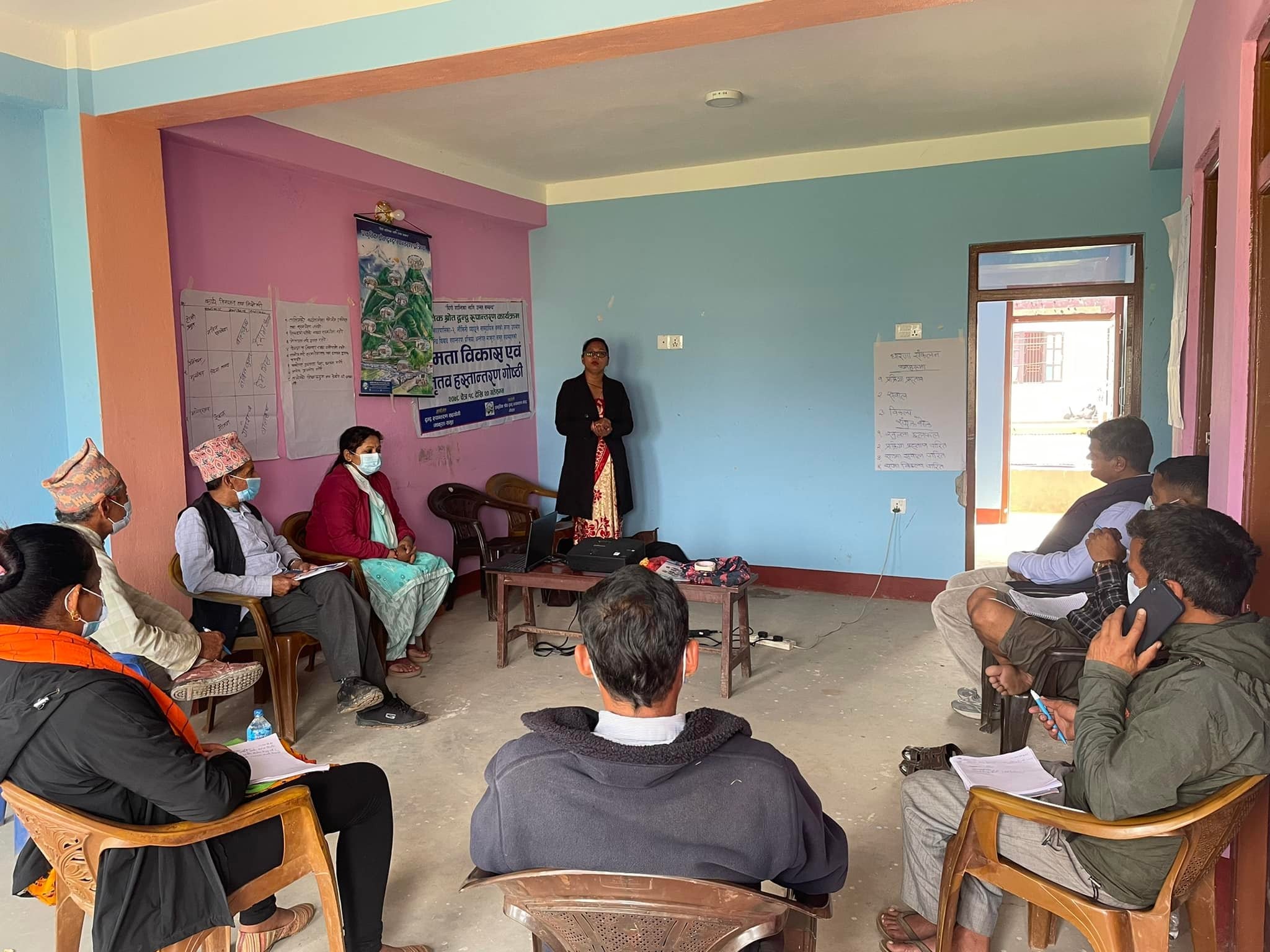
After conducting a thorough assessment, the organization began the facilitation process in Falgun 2078 BS (February–March 2022).
Those familiar with the intricacies of the conflict initially warned the facilitators, saying, "the forest land has been heavily encroached upon, and permanent houses have already been built. The issue has been politicized, with high-ranking leaders backing the encroachers. It would be better not to get involved in this."
Despite these warnings, the organization had no intention of backing down.
In the initial phase of the facilitation process, the organization formed a spider group. This was based on the principle that those who face the problem should also generate the pathways and options for its transformation.
The organization constituted this group by bringing together members from within the community itself. Just as a spider weaves its web by connecting flexible threads point by point, the group’s members are expected to gradually bring the wider community together.
Even after the spider group began its work, the process was far from easy. Its members faced threats and were subjected to intimidation and discouragement.
They were abused and told, "Let’s see how you manage to resolve this dispute! If you fail, we’ll parade you around the village wearing garlands of shoes!"
"We were selected to transform the conflict, but we were met with harsh accusations and verbal abuse. In the beginning, we did not really know how to work in such a conflict," said spider group member Navin Kumar Sapkota. "After receiving training and gradually engaging in the process, we began to understand how and in what way to move forward."
The group held repeated discussions and convened meetings with conflict associated parties. While the conflicting parties participated actively, complications continued to arise intermittently.
Jantare Tamang, who had built a permanent house on the forest land, continued to fuel the problem. By that time, several landless had also settled in the forest. Jantare incited them to ignore the organization’s directives.
He intimidated the squatters, warning them: "Do not attend the discussions; if you go, they will seize all the land you have cultivated, and you will be left destitute." By spreading such misinformation among the vulnerable squatters, he obstructed the facilitation process.
Even when he attended discussions or meetings, he refused to sign attendance or minutes. He tried to incite others to do the same. Signatures were necessary to provide evidence that all concerned parties had heard and acknowledged what was discussed in the meetings. Jantare, however, believed that the moment he signed, he would be legally compelled to immediately return the land he was occupying.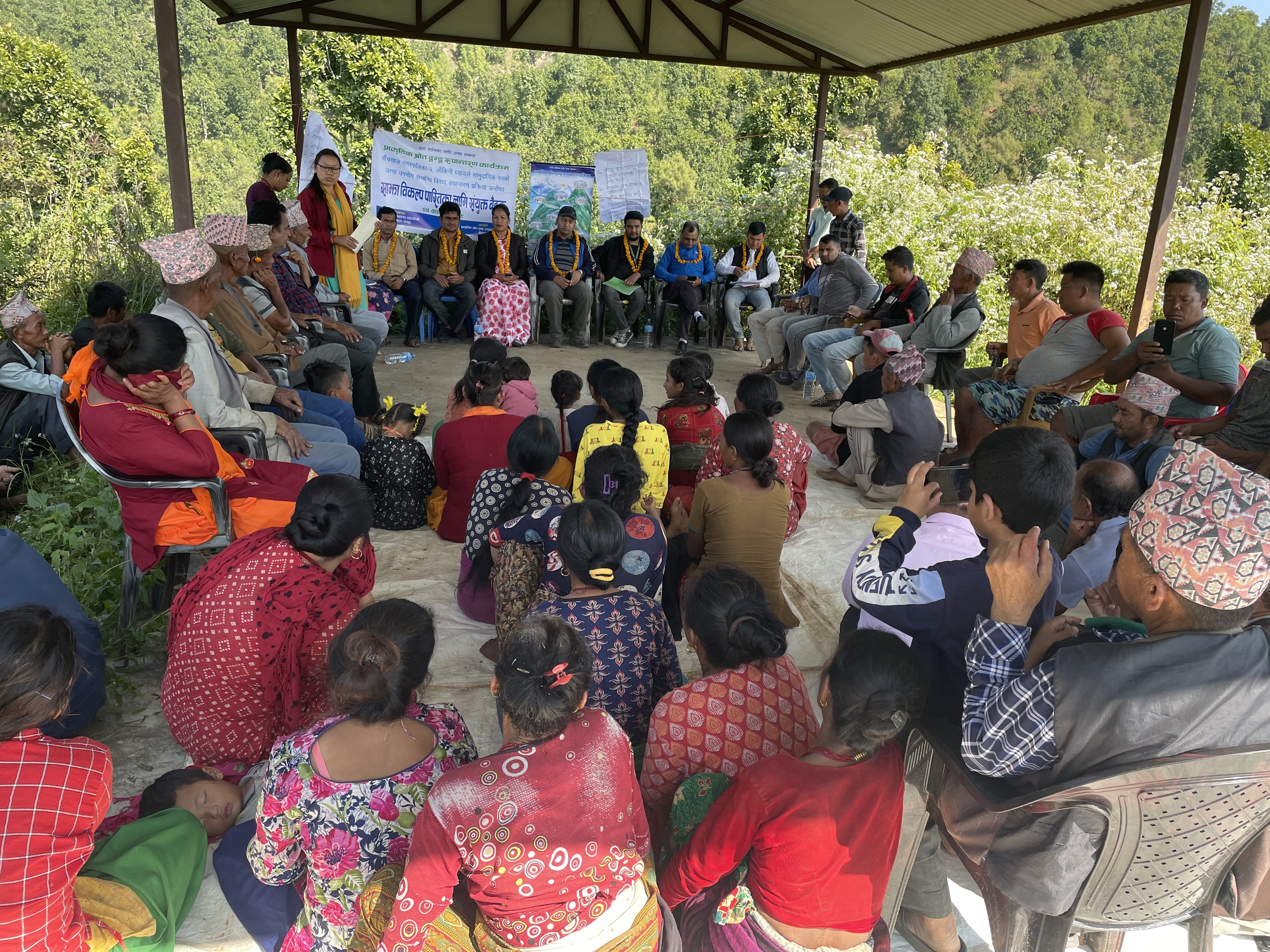
Confronted with these challenges, the members of the "spider" group became even more proactive in clearing the hurdles. They continued to conduct meetings and discussions in a phased manner. As the parties occupying and profiting from the forest land participated repeatedly in the discussions, they gradually began to understand the process and even started signing in minutes. Consequently, mutually agreeable options for transforming the conflict began to emerge.
Reaching a decision on these options took some time. Although representatives from the concerned parties had reached a consensus, they cautioned, "our agreement alone is not enough; we must involve everyone in the decision-making process to prevent future disagreements." Consequently, a broad consultation was held involving all stakeholders.
Finally, in Kartik 2079 BS (October–November 2022), an agreement was reached among the conflicting parties. Since the agreement was achieved after everyone had the opportunity to voice their perspectives, all sides appeared to be satisfied with the outcome.
The parties reached a consensus to demarcate the community forest boundaries and remove all temporary shacks within the area. However, it was agreed that permanent structures, including Jantare Tamang’s house, would not be demolished immediately. Instead, Jantare and others in similar positions were permitted to remain until the forest boundary survey was finalized, with a further resolution to request the Municipality to facilitate their relocation to a formal housing settlement.
Furthermore, they agreed to vacate the encroached forest land and repurpose it by planting fruit trees, fodder, and other income-generating crops in accordance with forest regulations. The agreement also included provisions for providing vocational training to the most marginalized forest users and ensuring the long-term protection of the forest.
Following the agreement, both the forest and the committee have been revitalized, and operations are proceeding accordingly. The process of surveying the forest boundaries is currently underway. Once this task is completed, Jantare Tamang will be required to vacate the land he has been occupying. Since he is set to relocate under a proper arrangement, he has ceased his resistance; he now understands that the land he cultivated is public property and must be relinquished. Locals remarked that the organization successfully resolved the conflict in a manner that resulted in a "win-win" outcome for all parties.
"The facilitation carried out by the spiders' to transform the conflict has been impartial and transparent, earning the trust of all parties and stakeholders," said the former chairperson of the forest users’ group. "In this conflict between the two parties, both have come out as winners. The spider members made a significant effort to transform the conflict in a way that no one would feel defeated."
The transformation of the conflict has brought about a positive shift in the local mindset. Residents who were once quick to anger over minor issues now prioritize dialogue and discussion. Instead of wasting time on conflict, the community has redirected its focus toward productive endeavors.
Ward Chairperson Rameshwor Dahal stated that, efforts are underway to identify income sources for the highly marginalized families living within the forest area. Through the ward office, Panchkhal Municipality is preparing to provide vocational training in leaf-plate (duna-tapari) and pickle making, tailoring, and other skill-based trades. He added that a proposal has already been submitted to the municipality for the procurement of leaf-plate-making machinery.
He further noted that, the conflict transformation processes adopted by the Natural Resource Conflict Transformation Center-Nepal (NRCTC-N) have proven highly effective. According to him, these methodologies can be integrated into regular ward-level operations.
"When we carried out other social activities, hardly anyone participated, and discussions and meetings were often disorganized. However, the discussions and programs facilitated by this organization saw high attendance and were extremely well-structured," said Ward Chairperson Dahal. "They achieved highly impactful results with minimal expenditure. I found the organization’s methods and procedures to be exceptionally useful."
Phulmaya Tamang, a member of the Community Forest User Committee, observes that the organization’s approach has deeply influenced not only elected representatives but the general public as well.
She shared the story of a local resident. According to her, the person had been embroiled in a family dispute for years. He had not divided his ancestral property among his brothers and co-heirs, using it solely for himself. He was determined not to give any portion to anyone. As a result, even the brothers living nearby for the past fifteen years did not communicate with him. They would not visit each other’s homes even upon a death in the family. The brothers were like bitter enemies.
When the organization began its work on the forest conflict, the person participated and stayed engaged throughout the entire process. As the process progressed step-by-step toward a consensus, his entire outlook underwent a transformation.
He eventually gathered all his brothers and legal heirs to distributed the ancestral property he had kept for himself for years. He did so through open discussion, ensuring everyone was satisfied with the outcome.
"Realizing that conflict yields nothing in life, he mended his relationships with everyone," Phulmaya said. "The silence caused by the property dispute finally broke. This past Dashain, they all gathered in one place to celebrate and receive Tika. What could be a greater change than this? All of this was made possible by the working methods of the organization and the spider group. The 'Spider' did not just transform a conflict over the forest; it settled the conflicts within people's hearts."
The members of the spider group, having overcome immense challenges, have also experienced a transformation in their own perspectives. The women, in particular, have gained significant self-confidence and resilience. Initially, China Tamang, a group member, faced skepticism from villagers who questioned a woman's ability to transform conflicts. Men often refused to attend discussions when she called for them. However, through persistent outreach and dialogue, she earned their trust, and they eventually began to attend meetings at her invitation.
"Whether it was because of the organization’s process or their growing trust in me, eventually everyone started showing up. My own confidence grew as well," she said. "Now, people in the village say they have learned so much because of this 'daughter-in-law.' Hearing that makes me proud. I have learned a great deal as a spider group member, and I am grateful for the opportunity to teach others."
Naveen Kumar Sapkota, another member of the spider group, finds profound fulfillment in dedicating his time to the welfare of his community. Although he has been involved in various social initiatives in the past, he notes that none offered the same level of challenge, learning, and genuine joy as this transformation process.
"With the conflict transformed, it feels as though a massive burden has been lifted from the community. People are notably less confrontational now. Through this, I also learned how to navigate and overcome significant adversity," he shared. "I have realized that working for the greater good of society brings a sense of inner peace and self-satisfaction that far outweighs any financial gain."
The Laukeni Ghyangle community forest story exemplifies how dialogue, persistence, and inclusive facilitation can transform complex natural resource conflicts. NRCTC-N’s spider web approach not only restored the forest but also transformed relationships, mindsets, and lives—demonstrating the power of structured, community-led conflict transformation.